In short
Looking for a PIM solution in 2026? Learn the 7 essential features that separate modern, future-proof PIM platforms from legacy tools — including AI-driven enrichment, data governance, omnichannel syndication, and analytics that turn product data into a competitive advantage
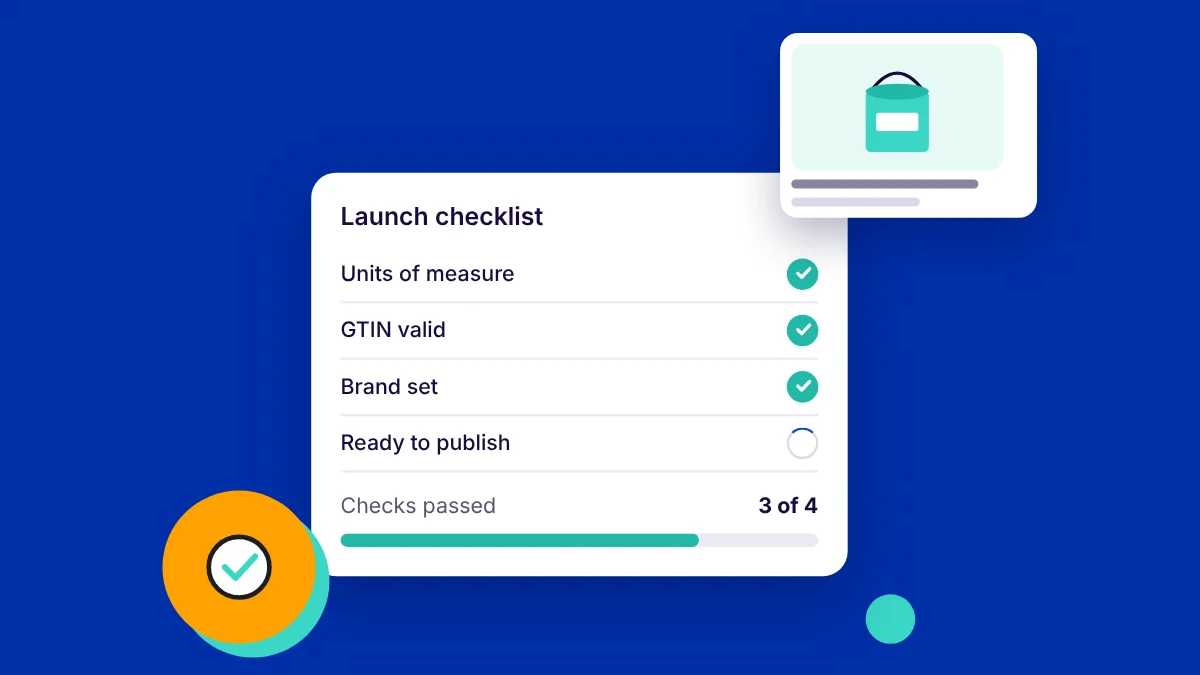
The discipline of Product Information Management has matured very quickly. In 2026, businesses in the know no longer consider PIM as a slumbering back-office repository where product data goes to have a lie-down. It’s become an active commercial powerhouse, shaping how products are discovered, understood, appreciated, trusted, and, ultimately, bought.
That’s why the process of selecting a PIM solution is now a strategic decision, not a simple retooling exercise. Make the wrong choice and you’re locked into rigid data models, manual workarounds, and a slew of missed opportunities on the digital shelf. Conversely, get it right and you gain speed, control, and a demonstrable edge over competitors who are still persisting with wrestling spreadsheets.
Based on our experience of and involvement in real-world implementations we’ve compiled a list of seven essential PIM features across manufacturers, distributors, and retailers – the features which separate modern, future-proof PIM platforms from databases which belong in the past.
So, let’s dig down and see what they are and why they are so crucial.
Every PIM vendor claims to offer a “single source of truth”, the “golden record. However, not all can deliver a truth which will work under real commercial pressure.
A modern PIM must centralise all product information in one governed environment: Attributes, descriptions, digital assets, classifications, variants, and relationships. This has to be able to scale with ease from a few thousand SKUs to hundreds of thousands without becoming ‘brittle’ or too slow.
What to look for:
If teams are still maintaining side spreadsheets “just in case”, your PIM isn’t doing its job.
You grow, and your product catalogue will change. New ranges emerge. Regulations expand in size and complexity. Channels stipulate new attributes. As all this evolves, a PIM with a rigid data model becomes a blocker to progress.
High-performing PIM solutions offer extensible data models which can adapt without requiring reimplementation projects. This means:
In this respect, flexibility isn’t an added bonus, but what enables merchants to respond to market change in days instead of months.
As automation and AI proliferate, bad data can scale faster than ever. Thus, a solid Governance framework is foundational.
A fit-for-use PIM solution must enforce standards, not simply document them. Areas to focus on include:
Additionally, this is where regulatory readiness should be the norm. From GS1 alignment to emerging sustainability and Digital Product Passport requirements, data governance features are what safeguard both revenue and brand reputation. Without them, chaos gets free reign.
AI is no longer optional in PIM. Having said that, neither is human oversight.
The best PIM platforms use AI to accelerate enrichment, not replace accountability.
As examples, typical use cases include:
Most importantly, AI outputs should be transparent, editable, and governed. It is not a panacea for manual data processing. If your teams can’t understand or control what AI is doing to your data, you’ve swapped out one risk and put another in its place.
Your customers aren’t just buying attributes. They’ll buy when they understand, which is why digital assets like images, videos, diagrams, manuals, and 3D displays have fast become core product data.
A high-performing PIM should either include native DAM capabilities or integrate seamlessly with a dedicated DAM, because teams can then:
If assets still live in shared and/or siloed drives, your product data enrichment will always lag behind your sales targets.
Integration is the name of the game. PIM is not operating in isolation. It needs to sit at the centre of a broader ecosystem:
That’s why API-first, composable architecture[1] has become an absolute must. Look out for:
This approach supports headless commerce, omnichannel growth, and future channels as yet unknown without having to rebuild your foundation every time your strategy shifts.
Those PIM solutions with the most advanced capabilities are fast evolving into product experience platforms. They go beyond just pushing data out as they can pull performance signals back in. Examples?
This powerful feedback loop transforms PIM from being a static system into an engine driving continuous optimisation. In short, it informs your enrichment prioritisation with hard commercial evidence rather than relying, basically, on guesswork.
The majority of organisations don’t suffer from PIM project failure because of missing features. Rather, it’s because they choose the right technology but configure it in the wrong way.
At Start with Data we work closely with businesses before, during, and after PIM selection. That enables us to better support you with:
In a nutshell, we help businesses turn their PIM capability into a fiercely competitive advantage, not a static piece of shelfware with limited usefulness.
In 2026, the question is no longer “Do we need a PIM?”
It’s “Is our PIM helping us move faster than our competitors?”
The seven features above are the baseline for answering that question with confidence. Get in touch with us today, and let’s talk in more detail about your situation and how we can provide expert PIM support to get you performing how you want.

Fill in your details and we will send it straight over.
Selection, implementation and support for product information management.

Talk to us about where you are and what a sensible next step looks like.