In short
Find out how to run a successful PIM RFP. Get tips on requirements, vendor evaluation, and selecting the right platform.
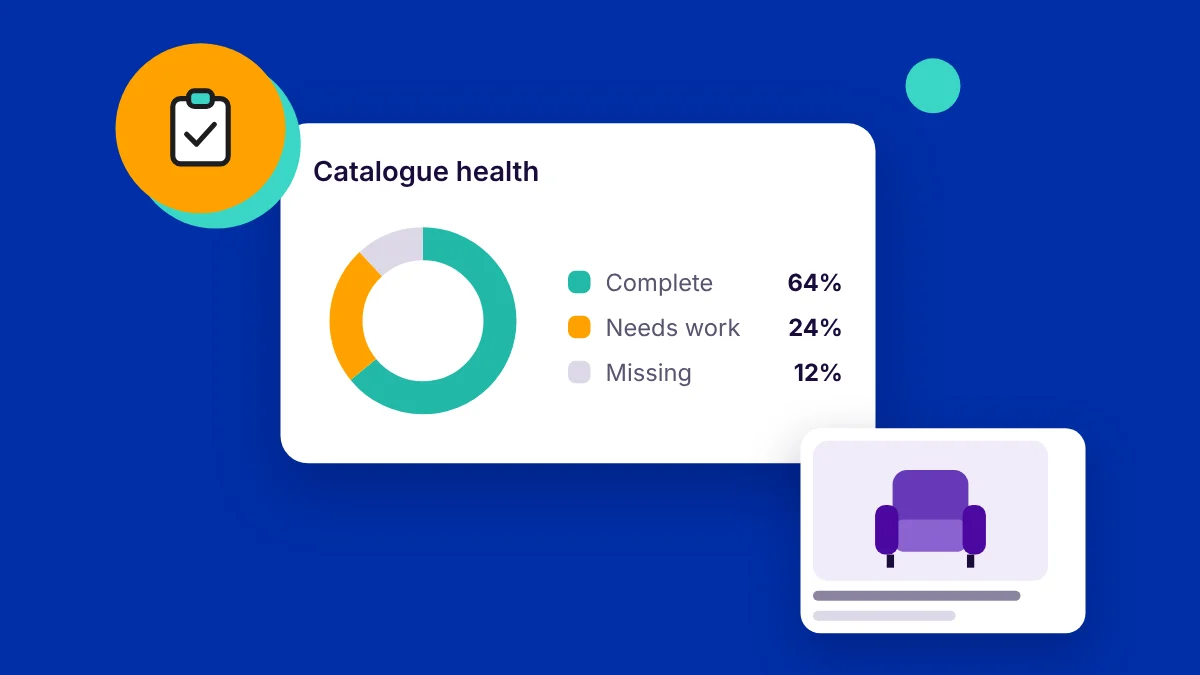
Running a Product Information Management (PIM) Request for Proposal (RFP) is a critical task for eCommerce businesses aiming to streamline their product data management. This article guides you through the essential steps of the PIM RFP process, from preparation to vendor selection, ensuring you make an informed decision that aligns with your business goals.
A PIM RFP is a structured process through which your business asks potential vendors to propose solutions to meet your PIM requirements. It outlines your business needs, inviting qualified partners to respond with solutions. This process is a key preparatory element to help you ensure you select a PIM system which will align with your business objectives, considering factors like integration ease, scalability, functionality, and cost.
A well-executed PIM RFP process is a substantial investment with considerable ROI potential. It guides you in selecting the ideal PIM for your business, saving you time, money, and future hassles. By clearly defining your requirements and goals, you can more effectively assess potential vendors and their proposals.
Enlisting the help of a PIM expert from the onset offers you valuable insights about your product data and guides you through the RFP preparation process. This investment is highly likely to save your company a lot of time, as well as avoid conflicts during implementation.
Examine your existing data, acknowledging any problems or discrepancies. The state of your current product data (quality, storage, and overall management principles) directly affects the cost and timeline when you eventually implement the PIM solution you’ve chosen.
Understanding the breadth and consistency of your product catalogue is crucial. Evaluate your products to have a realistic understanding of the total number of product families.
Identify where your product data resides and how it is maintained. This information helps PIM vendors provide more accurate implementation estimates.
Make sure you have a full and deep understanding of the extract capabilities of your current platforms. Additionally, outline all systems (such as ERP and CRM) which will need to integrate with the new PIM. This will result in more accurate proposals reflecting your approach to platform integrations.
Involving C-Suite ‘data champions’ can help overcome interdepartmental barriers and prevent scope creep during the PIM implementation.
The implementation of a new PIM affects various departments. Engage with and genuinely involve all teams that the new PIM will touch. You should also have a plan to address the inevitable organisational changes.
For a successful PIM implementation, you must articulate your specific requirements in the RFP. Here are some fundamental aspects to bear in mind:
Your PIM should allow for creating hierarchies and categories, managing product relationships, and ensuring consistent attribute mapping across platforms.
The PIM should manage workflows, support versioning of product data, and provide a flexible data model for structuring your product data.
Support for multilingual capabilities and high-speed batch import/export is crucial for handling large volumes of product data.
The PIM should provide APIs for real-time data exchange and robust data governance capabilities, ensuring data accuracy and security.
Make sure that your PIM system integrates seamlessly with other essential software in your business, such as ERP, Inventory, and eCommerce platforms.
Following the preparatory steps, you are now ready to prepare your RFP. Transparency is key to realistic estimates. A suggested Table of Contents for your PIM RFP includes:
Once you’ve sent out your RFP and the proposals start coming in, you’ll need to evaluate each one with a fine tooth comb:
Discard any proposals that don’t meet your fundamental requirements or are beyond your budgetary constraints.
Assess the quality of the responses, looking for clear, well-structured answers. Check if vendors understand your needs and if their solutions meet your specific requirements.
Score each proposal based on predefined criteria like solution fit, vendor experience, proposed cost, and timeline to compare the proposals objectively.
Invite each vendor to demonstrate their proposed solution, giving you a first-hand look at how their PIM offer operates.
Use meetings to probe deeper into how each vendor plans to implement their solution in your specific context.
During these discussions, gauge whether vendors genuinely understand your business context and the challenges you’re encountering.
Before the all-important final decision, revisit several factors:
Does the proposed solution align with your business needs?
Does the vendor have a proven track record of successful PIM implementations? Does your 6th sense tell you they will be a solid and reliable partner?
Is the price within your budget, considering the total cost of ownership? Are the payment model and terms acceptable – bear in mind that the majority of PIM solution vendors offer cloud-native platforms with a scalable subscription payment model.
Is the timeline they propose in line with your expectations?
What do other customers say about the vendor and their solution? Cross-reference specialist review sites like G2, Capterra, and TrustRadius.
Running a PIM RFP is a detailed process that requires meticulous planning and execution—it’s not a small investment! The steps outlined in this guide will help you make an informed decision, ensuring you choose a PIM solution that aligns with your business needs both now and in the future.
However, navigating the RFP process can be complex and time-consuming.
That’s where we come in.
Our PIM Selection & RFP Service takes the guesswork out of vendor selection, helping you define clear requirements, assess potential solutions, and ensure a smooth evaluation process. With our expertise, you’ll avoid costly missteps and find the right PIM for your business needs.

Fill in your details and we will send it straight over.
Independent help to shortlist, compare and choose the right PIM for your catalogue and team.

Talk to us about your shortlist and what each platform will really take to run.
